





 4 Min
4 Min In People

Follow this topic

Bookmark

Record learning outcomes
Once a symbol of industrial might and now a beacon of modern regeneration, Battersea Power Station has been reimagined as one of London’s most ambitious mixed-use developments. Heritage architecture blends seamlessly with high-end retail, dining and residential living spaces.
At the heart of this revitalised landmark lies a new approach to community health. The LIPS Healthcare Clinic is the latest outpost of London International Patient Services (LIPS) – a private healthcare provider established in 2016.
The clinic offers a wide range of private services, including diagnostics, imaging, minor procedures, and general medical and dental care, all under one roof. An integral part of this is LIPS Pharmacy, led by pharmacy director Daniella Fakhouri.
Currently operating without an NHS contract, LIPS Pharmacy focuses exclusively on private services, complementing the other medical services offered by LIPS Healthcare by providing private prescriptions, health checks and vaccinations.
A key part of the pharmacy’s offer is consultations for various health concerns, including weight loss, skin health, and gut and respiratory issues.
Creative challenges
With a background in clinical pharmacy, prescribing, clinical governance and patient safety, Daniella played an integral role in the launch of LIPS Pharmacy after joining the team just a few months before it opened in May 2024.
At the time, she was working part-time in a GP surgery, but she says the vision for LIPS Pharmacy intrigued her. “It looked great on paper,” she says. “It was a vision that, if it materialised, you could see absolutely flying.”
Drawn to the freedom and creative control the role offered – unlike her previous experience in corporate pharmacy, where decisions took ages to go through layers of approval – LIPS offered Daniella what she calls a “golden gateway” to shape the pharmacy from the ground up.
“I was the person responsible for designing how this pharmacy operated, sourcing stock, selecting brands, hiring staff and designing patient pathways,” she says.
This autonomy, combined with the opportunity to build something modern and patient-focused, was what inspired her to make the leap. However, the opportunity was not without its challenges.
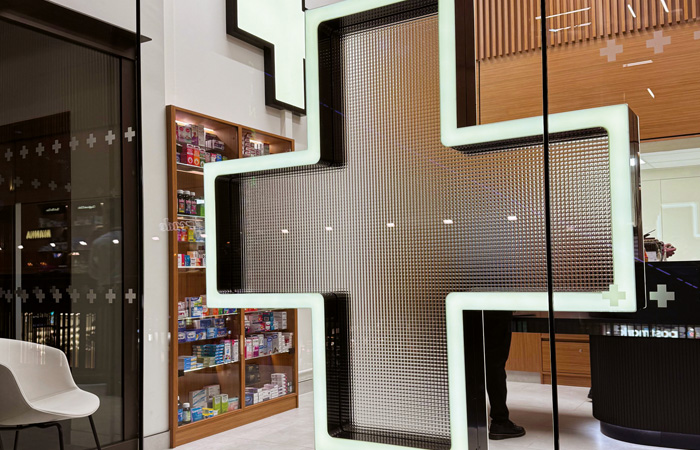
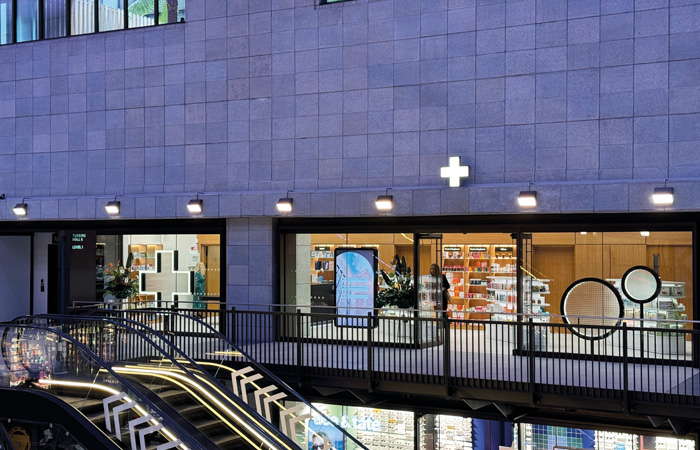
One of the most immediate obstacles was complying with the landlord’s highly specific aesthetic requirements, which limited how the pharmacy could present itself.
“Even something like signage is restricted,” explains Daniella. “We weren’t allowed to put our name outside like a normal pharmacy would, and we couldn’t even put a pharmacy cross in the window without getting permission. This made visibility and branding more difficult than usual for a new pharmacy trying to establish its presence.”
Starting from scratch
Because LIPS Pharmacy does not have an NHS contract, Daniella also had to design all of the patient pathways, service structures and pricing models independently, without the framework NHS services provide.
Without NHS prescription volume as a baseline, she had to strategically source stock and choose brands that aligned with a private client base, as well as hire staff who would embrace a different kind of pharmacy model. Here, the focus is on customer experience, high-end service and flexibility.
“We had to figure everything out from scratch: who the patients would be, how they would find us, and how the workflow would operate,” Daniella says. “And we had the additional challenge that many patients understandably assumed we were an NHS pharmacy and were surprised to learn that services were private and paid-for.”
Nonetheless, Daniella says there are several reasons why the private-only pharmacy practice model at LIPS works particularly well within the sleek and shiny Battersea Power Station development.
“The location attracts a health-conscious, affluent clientele, many of whom prioritise convenience and quality of service over cost,” she says. “This is a local population who value their time, want access to care quickly, and are used to paying for services that meet their expectations.”
Being based within the LIPS health hub also allows LIPS Pharmacy to offer an end-to-end patient experience. “We are part of a broader healthcare offering, so when patients come for one thing, we are here to support them with the rest, whether that is prescriptions, health checks or product advice,” Daniella explains.
“We’ve proven that this model works. Now we want to take it further”
Freedom to innovate
Operating outside the constraints of the NHS contract has given the pharmacy freedom to design services and choose stock that reflects what patients in the area actually want, rather than sticking to a one-size-fits-all business model.
Daniella says the public reaction has been overwhelmingly positive. “Many customers are surprised but impressed,” she says, “especially once they realise the pharmacy can offer quick access, same-day service and tailored health advice. They are usually not expecting this kind of pharmacy, but once they understand it, they really value the experience. We are building relationships with patients who now see us as their go-to for healthcare. I see that as a huge success.”
Maximising private revenue
Daniella’s advice to other pharmacists looking to use their independent prescribing skills to maximise private revenue is to focus on high-impact, low-time services.
“Start with conditions that are straightforward to manage but in high demand,” she says, “such as skin problems and weight loss treatments. Urban pharmacies may see more demand for travel health and weight loss; rural areas might benefit from UTI and contraception services. It is about spotting where you can genuinely help the patient quickly, safely and effectively. They are often happy to pay for that speed and convenience.”
Daniella emphasises that her pharmacy’s goal isn’t just one-off sales – it is building relationships through reliable, accessible care and clear value.
“When patients trust your advice and see the value in what you provide, they will come back and recommend you to others,” she says.
Key to this is that pharmacists feel confident promoting their services, especially online. “Use your website and social media to list your services and fees clearly, make booking easy and explain why your service matters – and don’t shy away from talking about your qualifications,” Daniella says.
“Patients value that expertise and since you are not just selling a product – you are offering clinical access – that is worth promoting.”
However, she cautions pharmacists to stay within their clinical competence and refer to GPs or specialists as necessary. “Confidence is important, but so is clinical responsibility,” she says. “So know your scope, and the patients will respect you for it.”
An inspiring experience
Michael Holden, managing director of MH Associates, a consultancy supporting organisational development and change in pharmacy and pharmaceutical care, worked as an adviser on the LIPS Pharmacy project.
He believes pharmacists should not rule out running their own pharmacy, even if – like LIPS Pharmacy – it doesn’t have an NHS contract. But he warns: “No-one should underestimate what it requires to put all this in place.”
“Battersea Power Station is an iconic and inspiring building. It was only right that it should have a community pharmacy that reflects and inspires the future of the sector and delivers a truly outstanding patient experience,” Michael says.
“Working with the LIPS team, their architects, project managers and the pharmacy shopfitter was a wonderful challenge – one that allowed me to apply all my experience and aspirations for community pharmacy.
“We began with the principle that this would be a private, non-NHS pharmacy to match the adjacent health clinic. But that required us to think differently about the layout, the visual impact, the services, the consumer health inventory, the systems, the governance that underpins all that, and the team ethos and skill mix required to deliver it.”
“Given the limitations of the current PNA-based control of entry model, the NHS contract remains a challenge, despite the identified access improvements. It is, however, probably an easier way forward and one which others may choose to follow. Or they may stick with the private model and work hard to make that viable.
“Whichever the route, and even with the latest ‘first steps’ settlement for the contractual framework, no pharmacy will survive on NHS services alone,” he believes.
Expansion goals
As the traditional model of community pharmacy continues to shift, LIPS Pharmacy offers a glimpse into a future that is patient-led, flexible and digitally enabled.
Daniella’s hope for the future of LIPS Pharmacy is to blend private and NHS services, allowing the pharmacy to serve a wider range of patients while continuing to offer the flexibility and innovation of the private model.
For the time being, however, despite the clear demand and the fact that the nearest NHS pharmacy is a mile away, LIPS Pharmacy has been denied an NHS contract.
“We want to be that accessible healthcare point for everyone, not just those who can pay,” says Daniella.
“We are not giving up. We are determined to reapply and show that what we are doing here is valuable, and could be even more valuable with NHS backing.”
Daniella hopes LIPS can be a blueprint for modern pharmacy delivery, combining clinical care, private access and, eventually, NHS services in one patient-centred, forward-thinking setting.
“We have proven that this model works,” she says. “Now we want to take it further, with NHS support, so we can serve the whole community.”

Share:


In People